Everyone tells you weight loss is supposed to just work. Smaller plates, more steps, and the scale teases fast results in the first few weeks.
Then - nothing. Weeks of nothing. You eat less and less, and the number won’t move. At some point you stop weighing in. The number stopped meaning anything except still stuck.
If you’ve felt like this, you’re not alone. Here’s a few reasons why weight loss tends to stall out.
Your body loves defending its weight
While you’re eating less, your body’s working to hold on to precious calories. Hunger goes up, energy burn goes down in sneaky ways.
And it will keep adjusting until the loss stops. It’s a survival mechanism on the evolutionary level.
You’re not in a fair fight against your biology, especially when trying to lose significant body fat.
That’s why GLP-1s became so popular. It helps you dull the survival signal as it gets more and more intense.
The metabolic thermometer: “Just eat less” stops working because your body’s just trying to hold on to calories, to keep you alive. It will send subtle signals to move less, eat more, and cheat on the meal plan just enough to hold up weight loss. A GLP-1 treatment helps lower the appetite signal.
¹ Leibel RL, Rosenbaum M, Hirsch J. Changes in energy expenditure resulting from altered body weight. N Engl J Med. 1995;332(10):621-628. doi:10.1056/NEJM199503093321001
² Fothergill E, Guo J, Howard L, et al. Persistent metabolic adaptation 6 years after "The Biggest Loser" competition. Obesity (Silver Spring). 2016;24(8):1612-1619. doi:10.1002/oby.21538
The high-dose GLP-1 trap
Bar none, the cheapest* way to get a GLP-1 is a website that mails you a script and disappears. No plan, no guidance, no help when weight stops moving again.
Every real weight loss curve has plateaus, and the trap most people fall into is pushing a higher dose to compensate. When it stalls, push again.
You should never have to start a real medication without real support. Ongoing care is the key to weight loss that works AND sticks.
If you want weight loss done right, keep reading.
The body is stubborn on purpose
The risk of “just take more”: Your dose is a medical decision. It should depend on how you responded, your side effects, and where you are in the journey. It’s not a lever you yank because the scale paused.
Weighing side effect and long-term risks on your own is dangerous, and you should never have to make that decision without medical guidance.
Losing weight does not mean just losing fat: Losing weight rapidly often means losing weight AND lean mass like muscle. In DXA substudies, roughly 25 to 40 percent of GLP-1 weight loss was lean mass, depending on the medication (about 25% with tirzepatide in SURMOUNT-1; about 40% with semaglutide in STEP 1). While that’s normal, it’s much easier to lose the fat and keep the muscle when you’ve got medical guidance on dosage and making sure you understand how exercise and diet factor in.
Overall, a GLP-1 program with a care team is key to losing the right weight, consistently.
The stall is not a wall when you have support
Picture a weight loss program with
- Consistent progress and real support before you get stuck
- Care team and doctor guidance, available when you need
- Access to additional therapies like Growth Hormone Peptides as needed
That’s the Maximus difference. Real medical care, ready when you need it.
Compare options
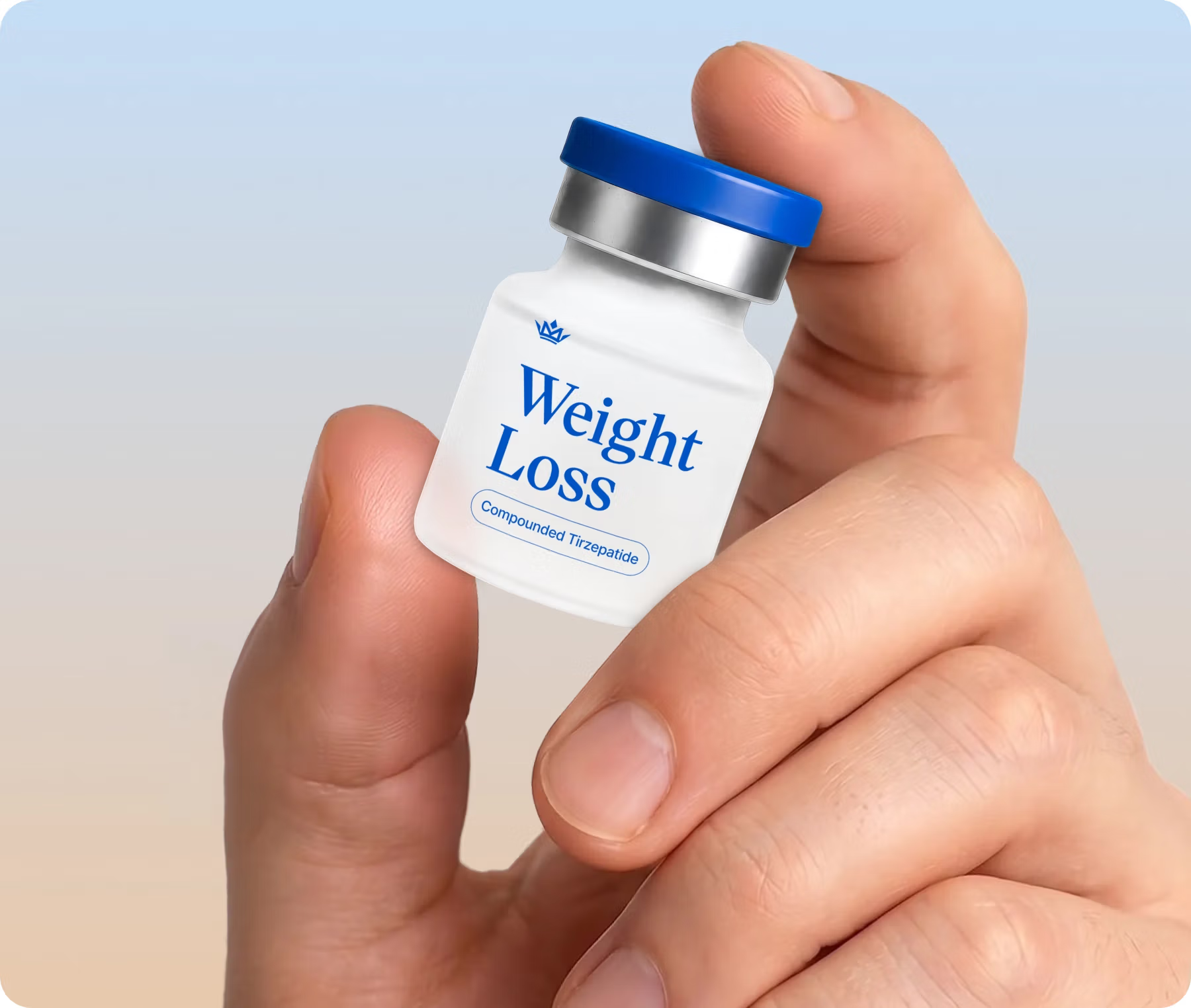
Compounded Tirzepatide
Performance GLP-1 care
- ✓ Physician-designed GLP-1 protocol and support
- ✓ Regular refill check-ins
- ✓ Care team messaging
- ✓ Free eligibility check
- ✓ Change to weekly injections, pills, or pens depending on preference
Protocols designed by leading performance medicine practitioners at






Proven results

Contact your provider immediately if you have severe abdominal pain that does not go away (possible pancreatitis); a lump/swelling in your neck, hoarseness, or trouble swallowing (possible thyroid tumor); severe vomiting or diarrhea with signs of dehydration; symptoms of low blood sugar; or signs of a serious allergic reaction. Regular monitoring may be needed to track your response to treatment.
Compounded medications are not FDA-approved for safety, efficacy, or quality.
Read more
Common side effects may include:
- nausea
- diarrhea
- vomiting
- constipation
- decreased appetite
- abdominal pain
- fatigue
Rare, but serious side effects may include:
- severe gastrointestinal events leading to dehydration and kidney injury
- pancreatitis (severe abdominal pain)
- gallbladder disease
- severe allergic reactions
- hypoglycemia when used with insulin or a sulfonylurea
- diabetic retinopathy complications in those with type 2 diabetes